Tuesday, January 31, 2012

Elwha River Restoration Project: Take 2

So many of you have heard about the Elwha River Restoration Project. Well, after the removal of the old Elwha Dam, they are more focused upstream...


"The explosives experts have now turned their attention to the Glines Canyon dam on the Elwha River as part of the restoration project."

Click on the picture above to view the latest video...

Boom...literally...Morgan

Risen Fly Co.


Bonus Reel: Faceless Fly Fishing- Plan B

Since its second Monday (Tuesday), I thought I'd be nice and give you a bonus reel. Check our Faceless Fly Fishing Media's newest video, only 23 hours off the editing board...


Boom...Morgan

DIY...Altoids Fly Box

So I ran into this rad idea from Rustic Lifestyle of turning your old Altoids box into a fly box. I know some of you may have beat me to it but its ok, I was dropped on my head as a child, I'm a bit slow. So here's how I did it...

1. Get an Altoids box...your breath probably needs it anyway.


2. Get some craft foam from your local craft store.


3. Trace out the fly box on the foam 4 times and cut out the inserts.


4. Super glue the inserts into the box, 3 inserts on one side and 1 on the other.


5. (Optional) Cut lines in the foam for your flies to fit into.


6. Catch fish and smile.

Boom...Morgan

Daily Reel...Heart of the Driftless Trailer

So the dude that brought you Zero to Hero and Reverb, RT, has released the trailer for his newest film, Heart of the Driftless. RT is the author of the site Third Year Fly Fisher. Check out this new trailer and try to keep it in your pants...


The DVD will be available in March and comes with Reverb on it, gnar, 2 for the price of 1. Check out his other little videos on his Vimeo and make sure you check out his site.

Boom...Morgan

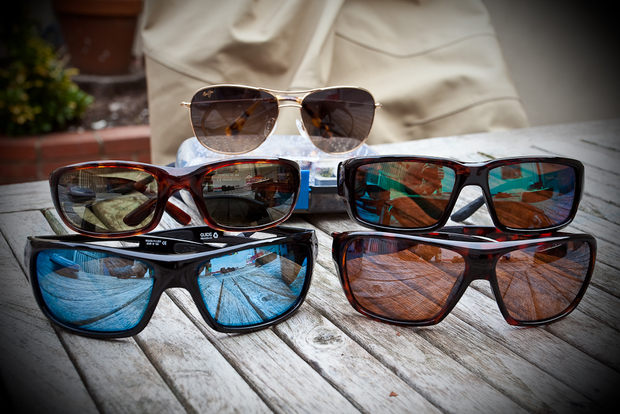
Hatch Magazine's Best Fishing Sunglasses of 2011

(Polarized) Sunglasses and fishing go together like peanut butter and jelly. So when I came upon this article on Hatch Magazine's website (keep in mind this is not the TRUE Hatches Magazine, but simply a copy of the original that was founded 5 years ago), I decided to reblog it here. I'm in the market for some new polarized dogs so this article will most likely make the decision for me. Check it...

Part One


It's not everyday that you begin a feature with a definition of one of the words in the title. Still, here we go. Best [best]: (adj.) A standout amongst counterparts; of the highest quality, excellence or standing. Now that you know what we think "best" means, take note that these are our opinions. None of us are opthalmologists, optometrists or otherwise experts on optics, nor can any of us every recall claiming to be so. That said, we wear a lot of fishing sunglasses and consider it very serious business. Trust me, if you're otherwise obsessed with gear -- and you're not currently obsessing over sunglasses -- boy, are you missing out.
Best Fishing Sunglasses 2011
Standouts amongst the many tested.
Frivolous obsessions aside, however, sunglasses are one of the most important and crucial pieces of gear in a fisherman's arsenal. While it's certainly not always true in fishing that you can't catch what you can't see, vision is one of the key aspects of the game. Sunglasses play a key role in how good your vision on the water is, so there's a lot to be said for getting it right.
The few selections that follow are our favorite of the glasses we tested during this past year. Some of these are new to market, some are not.

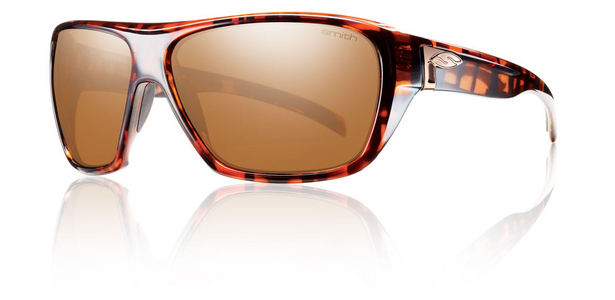
Smith Optics Chief Polarchromic Copper Mirror

Since they arrived, the Smith Chiefs have been perhaps our most go-to pair of glasses. This is due in no small part to their amazing versatility. There is little surprise in this fact, as we've been extolling the virtue of Smith Optics' glasses for years. Smith bestowed the Chief with their usual hallmarks: high quality plastic frames with an underlying metal core, metal spring hinges, Smith's TFT polarized glass, megol pads on the nose and temple and anti-reflective and hydroleophobic lens coatings.
Smith Optics Chief Sunglasses
What We Liked
At the end of the day, the most important feature of a pair of sunglasses -- especially fishing sunglasses -- is their lens. Day after day, the lenses in the Smith Chief continue to amaze. Clarity is startling. As we're often changing glasses, returning to the Chiefs repeatedly elicits the same reflection on how crisp and clear the lenses are and how full of life the tone is.
The polarchromic lens which, in addition to being polarized, darkens and lightens depending on the amount of ambient light also seems to shine at virtually all times of the day and lighting conditions. The spring hinges and megol pads keep the Chiefs snugly in place and the frames wear surprisingly light for large framed glass-lens sunglasses. We also loved the large coverage on the Chief, matching or exceeding glasses we tested with aggressive wrap-around styling that made for great coverage but abhorrent styling.

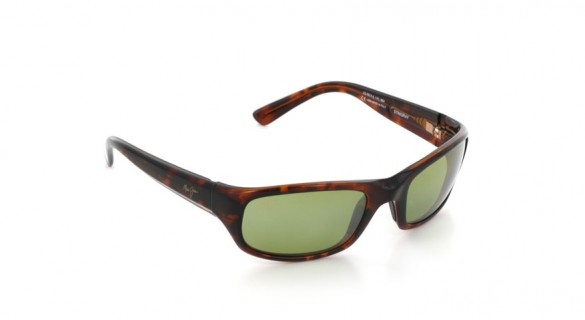
Maui Jim Stingray HT / HCL Bronze

The Stingray and other models with Maui Jim's standard and much-loved HCL Bronze lens have been our go-to fishing glasses for many years now. Maui's HCL Bronze lens offers versatility and amazing optical clarity and has become the favorite of many fisherman around the world. After our recent testing of the Maui Jim Stingray with both the HCL Bronze and Maui HT lens, we just may have found the perfect 2-pair quiver of fishing sunglasses.
Maui JIm Stingray Sunglasses
What We Liked
Maui Jim consistently excels beyond all other manufacturers in frame quality. Even compared to the aforementioned Smith Optics Chief, which rests significantly above the rest of the pack in regards to frame quality, the frames of the Stingray stand out. The sturdiness and well-constructed feel of Maui Jim's frames are immediately apparent, and the spring hinges seem bulletproof compared to flimsier competition.
As mentioned, the HCL Bronze lens is a versatile lens offering stunning optical quality and excellent polarization. It was our testing of Maui Jim's HT (High Transmission) lens that provided perhaps the biggest surprise of all the many pairs of glasses we tested. The HT lens is designed to offer better visibility in low-light situations such as early morning and evening while boosting depth-of-field and contrast. We unsurprisingly found it to do exactly that but were surprised at how well-rounded the HT lens turned out to be. Not only did the HT lens allow us to wear polarized lenses when other sunglasses we tested were much too dark (and we're talking very early morning and till near-dark in the evening), but they've become our all-day lenses on overcast days and also carried us through much of the day on all but the sunniest outings.
Packing the Maui Jim Stingray in both lens options may offer the best of all possible combinations. To be fair, a two-pair quiver of fishing sunglasses that come to the table at $215 per pair may not be in the cards for a lot of people out there. Given that, it's worth mentioning that either of these two pairs of glasses stand up to the competition almost as well on their own merit.

Part Two

Continuing from the first part of our Best Sunglasses of 2011 feature, we detail the remaining pairs of fishing glasses we found to stand out from the competition.
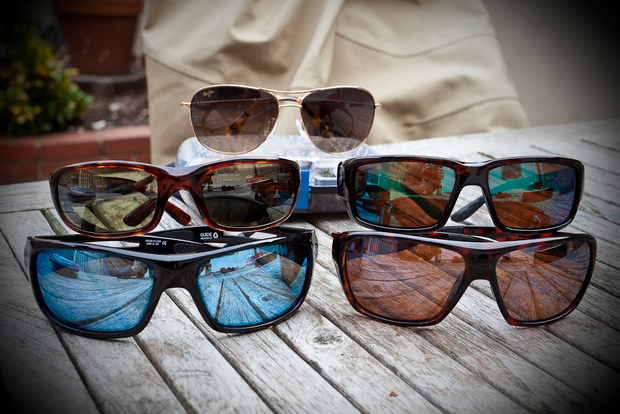
Best Fishing Sunglasses of 2011: Part Two
Our 5 favorites pairs of sunglasses in 2011.

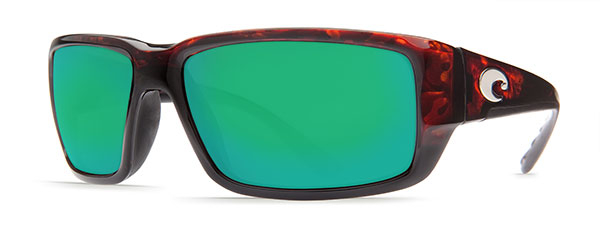
Costa Fantail 580G

Costa is one of the few companies out there that design sunglasses solely or primarily for fishing. While other companies have either had fishing as part of their focus for years or have grown their fishing focus rapidly in recent years, Costa is one of a select group that cares about fisherman first and foremost. And it shows. Costa's designs are built from the ground up with fishing in mind, not adapted as an afterthought.
Costa Fantail Green Mirror 580G
What We Liked
The 580 glass is Costa's premium glass, and is heavier than its 400G counterpart. That said, we'd welcome a chance to test the 400 glass as well, given that the Costa Fantail 580G was by far the lightest wearing of all the glass-lens pairs we tested. In fact, there were times we wondered whether we received a pair with polycarbonate lenses by accident but as it turns out, these glasses are just that light. Costa claims that the 580 glass is offers the highest clarity on the market, and while we found offerings from Maui Jim and Smith Optics to be at least as clear if not clearer, we had absolutely no complaints with Costa's glass. The clarity was superb.
The other clear standout feature of Costa's Fantail (and most other glasses), a feature which no doubt is a genesis of the aforementioned fishermen-first thinking at Costa, is the full Megol coating on virtually every surface that touches your body. Familiar places like nose pads and temples are Hydrolite™ (similar to Megol) coated, but so is the entire underside of the frames. Every place these glasses touch you, they stick. Hang upside down, try to shake 'em off, they stick. Whenever we wore the Fantails, we ditched the leash. No matter what the conditions, these things just don't fall off.

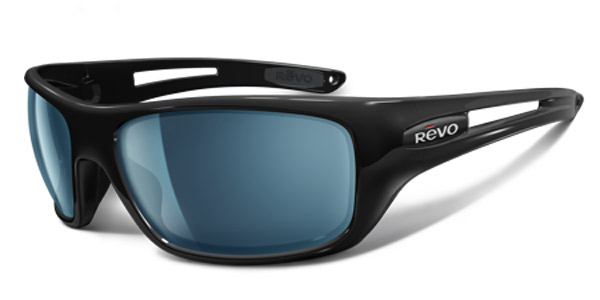
Revo Guide with Water Lens

Revo's Guide sunglasses are part of a relatively new line by Revo which is geared toward people who spend most of their time on the water. Revo's Water Lens a polycarbonate plastic lens that is designed to reduce the impact of blue light, allowing greens and reds to shine through. While most at home in deep water locations (oceans and lakes), the water lens is also well suited to uses on streams and rivers. The Guide is built on Revo's Eco-Use platform, which is a nylon frame material made from the seed of the castor bean plant instead of petroleum. This makes Revo feel green and fuzzy inside, and they expect it will make you feel the same. The Guide also packs a whole host of other features, such as a hydroleophobic coating, high-contrast polarization, and an integrated leash system.
Revo Guide Water Lens
What We Liked
As a general rule, we're glass lens people. For me, personally, I've never found a pair of plastic or polycarbonate lenses that can stand up to glass lenses in terms of clarity and I've never understood the constant complaints from glass-lens detractors about how heavy they wear during the course of a day. The Revo Guide sunglasses have served to change my opinion on both these parts. These lenses are good. Are they glass good? Probably not. But don't be mistaken, these lenses are crisp and clear with excellent polarization. And that whole bit about how polycarbonate lenses are the solution for people who find the weight of sunglasses with glass lenses unpleasant? Apparently that's spot on. It's not that I've all the sudden realized that I unknowingly couldn't bear the weight of glass lenses -- they don't bother me -- but I have been introduced to the joys of how light polycarbonate is. These glasses are shockingly light, due both to their polycarbonate lenses and the Eco-Use frame material. On several occasions I, quite literally, forgot I was wearing them.
Not to go unmentioned is the Guide's integrated leash system. Revo has added this feature to the Guide and a few other styles. The glasses ship with an included leash that snaps into the frames at the temples. The result is a leash attached more snugly to your glasses than most traditional leashes and one that, more importantly, attaches seamlessly. No rubber pulling at the hair behind your ears, no big connectors digging into the sides of your head and driving you crazy. The integrated leash is a welcome feature that left us wondering why no one had thought of this before.

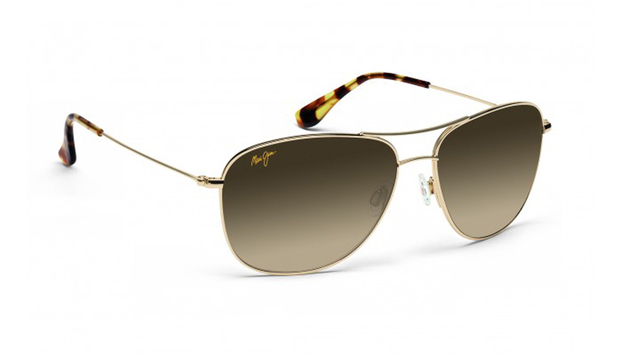
Maui Jim Cliff House

The advantages of building a best of list about something you're not experts on is that you get to make up the rules. Feet to the coals, we'd probably admit that there are other glasses better suited to the rigors of fishing than the Maui Jim Cliff House. That said, the Cliff House has served us well on many a fishing outing and will continue to do so into the future. The Cliff House packs Maui's HCL bronze lens, an excellent, versatile lens with superb polarization that is a fixture in fishing sunglasses around the globe.
Maui Jim Cliff House
What We Liked
The Cliff House is an aviator-style pair of wire-framed sunglasses from Maui Jim. As a general rule, wire-framed glasses aren't most angler's first choice because of the fact that they're delicate compared to their plastic framed counterparts and because they usually have significant coverage issues. Plastic framed styles typically offer greater coverage, more commonly have wrap around styling, and block ambient light better. Wire framed glasses are much more subject to light bleed. The Cliff House glasses, however, are a larger aviator-style pair of glasses that offer significantly better coverage than other wired-framed styles we've tested (though they admittedly don't compare to plastic framed pairs).
They also wear very light. Even with Maui's HCL Bronze lens, the Cliff House wears as light as the Revo Guide we liked so much for its easy wearing. Still, the main reason for the Cliff House making our list is styling. Suffice it to say that without the aforementioned coverage and weight perks, we couldn't have included it, but given them we're able to include a break from the norm. After years of black and tortoise shell plastic frames, it's nice to change things up. And they look cool. You haven't forgotten that sunglasses look cool, have you? People start wearing sunglasses for the same reason they start smoking. One is a habit well worth holding on to, the other, not so much.

Conclusion

There are seemingly countless pairs of sunglasses on the market these days. Some come from manufacturers which hold quality and optics sacred while other come from style-first outfits. In today's day and age, though, you can have both. In recent years, there are more and more options designed specifically for those who fish available to us, as manufacturers focus more and more attention on a huge population of sportsmen and women to whom vision is paramount. Though there are no doubt dozens of other excellent pairs of glasses out there available to purchase, these represent our favorite of those we've had the privilege to test over the last 12 months. Hopefully, should you decide to dive in to any one of these pairs, you'll end up thinking we know what we're talking about.
Hope this helped you guys out as much as it did me. Sorry it doesn't give the price points but you can imagine they are in the $70-$200 range, its all up to your bank accounts, girlfriends/wives, and personal preference as to how much you'll spend and on what brand. Personally, I'm a Knockaround guy but they don't have polarized lenses...yet, so I'm a Costa guy.
Here's two ways you can get your hands on a pair of free sunglasses. 
1. You have to be a photographer (or at least a dude with a camera).
2. You have to sign up for the contests (see below).
3. You have to win.
So how do you do it? Visit Hatch Magazine's photo contest here or Sport Fishing Magazine's photo contest here. Hatch Magazine is currently giving away some Maui Jim Guy Harvey Collab sunglasses and Sport Fishing Magazine is currently giving away some Costa Del Mar sunglasses. My entries are in...are yours?
Boom...Morgan

Stewardship Tip: Don't Dump Your Bait Bucket

Just got an email from Recycled Fish with one of their stewardship tips...here you go:


Dick's Sporting Goods Logo
 
Dick’s Sporting Goodshas deep roots in fishing.
 
DICK’S started as a small bait-and-tackle shop over 60 years ago.
 
Today, DICK'S is proud to partner with Recycled Fish to assist in the ongoing stewardship of our fisheries.


Rainbow Trout were introduced into fishless Diamond Lake, near the headwaters of the Umpqua River, in 1910. The rainbows thrived. Fish weighing 10 pounds were not uncommon.

In the 1940′s, tui chubs were introduced into Diamond Lake. The chubs were used as live bait; a practice that was legal at the time. Eventually, the tui chubs established themselves. While the rainbows ate the chubs, the chubs feasted on zooplankton.  They thrived, multiplied, and, literally, cut off the rainbows’ food chain at its base.
 
The effect was devastating. Catch statistics indicated that anglers caught 12,807 rainbows in 1947 with an average length of 15.75 inches. In 1953, the number dropped to 8,455 rainbows with an average length of 9.6 inches.

Diamond Lake was treated with rotenone in 1954 and, according to the Oregon DFW, the treatment was 100% successful. Trout were successfully reintroduced.
 
In the 1980′s, tui chubs were introduced into Diamond Lake once again. This time illegally.  In Oregon, it is now against the law to use live bait fish in freshwater streams and lakes.
 
In 2006, the Oregon DFW treated the lake with rotenone, a second time, to rid the lake of 95 million tui chubs.
 
Don’t dump your bait bucket:  When we mention aquatic nuisance species, we often think of  exotic species such as zebra mussels or Asian carp.  We do not think that the contents of our bait buckets as something that can be a nuisance.  But the contents of your bait bucket can spell trouble for your local waters.
 
Don't dump your bait bucket in the local lake.  Take any unused bait home and bury it in the garden.  If you don't have a garden, dispose of your unused bait, bagged, in the trash.
So go out and do your part you little minions, keep our planet safe and healthy for our children and children's children. Conservation starts with you guys and is done one angler at a time.


Boom...Morgan

Monday, January 30, 2012

Daily Deal...Fish Itch Rod Clamps


Regularly $11.99, now $5.98 (50% off)

You might couldn’t tell by lookin’ at me, but I don’t move real quick. But by God, when I wanna change up m' rig, I don’t want to dink around. That’s why I set up a few rods from the get-go and have ‘em at the ready. These here rod clamps let me stick a couple rods right where I can grab ‘em fast. Plus, I can fish one rod and have the other one deadstickin’ a hole, slick as a whistle. I snap a flashlight into one of ‘em, too. For less than I’d pay for a couple dozen waxworms, I got a way to keep m’ stuff organized in the shack, and in the summer I just put these on m’ camp chair and use ‘em to hang onto my rods while I snooze under the ol’ shade tree--cuz I'd rather not wake up to find my pole half way down the drink!


Boom...Morgan

Daily Reel...Cold and Lucky

Check out My Leaky Waders new video...Cold and Lucky (very lucky).


Boom...Morgan

Fish Art: Inked Animal

I was doing my daily blogroll drive-by and found this site, Inked Animal, thanks to Die Fische. Here's the 'About' section from IA's site:

"Adam Cohen and Ben Labay both work full-time as fish biologists in Austin, Texas. Since 2007 they have been working together in their spare time making unique fish and animal prints (Gyotaku). This website is intended to be a showplace for their unique works of art.

Adam grew up in Houston, Texas in a family that encouraged exploration and adventures into neighborhood ditches to collect plants and animals for aquaria. He developed a strong interest in aquaria and biology in general and has since coupled that interest with a unique artistic style. Adam has lived in Austin, Texas since 1993 studying biology at the University of Texas at Austin and earning a Masters Degree studying fish in Cuatro Cienegas, Mexico. Adam currently works full-time at the Texas Natural History Collections in Austin working with Texas fishes and in his spare time pursues various artistic endeavors. He works mostly with colored pencil, but has branched out to various media such as insect collages, Gyotaku, photography and acrylic painting. Adam’s other work can be seen at www.AdamEspeleeCohen.com and www.Silverfish-Art.com. Adam can be contacted at Adam@AdamEspeleeCohen.com.
Ben also grew up in the Houston vicinity with many opportunities to explore nature and fish with friends and family. His family has been fishing out of Galveston and Matagorda Bays with him since he was a toddler. Ben moved to Austin for college in 1999, and earned a Bachelor’s degree in biology at the University of Texas at Austin in 2002. Not until returning from a 3 year sabbatical in Alaska did Ben discover the art of seining and decided to turn his focus to the study of fish and streams. He now has a masters in aquatic resources and works as a fish biologist at the University of Texas at Austin. Ben can be contacted at BenLabay@gmail.com.

Concept and process:

about by Inked Animal
Gyotaku, which literally translates to “fish rubbing”, is a traditional Japanese art form that dates from the mid 1800’s. Traditionally an image of a fish is created by inking the specimen and then pressing it against rice paper to create an ink “impression” of the original. Although traditionally and most commonly created using fish, the art form itself, we believe, should not be restricted to fish. Here we break out of the traditional mold and experiment by applying the method to other animals and various media other than traditional inks and papers as well. Being most interested and knowledgeable about the Texas fish fauna we focus predominantly on Texas fish species. But freely experiment with what we can do with other animals.

Our artistic process is continually evolving. We use various light-fast inks and acrylic paints to achieve what we believe to be interesting and beautiful artistic pieces that reflect the reality of the specimen from which the art is created. Every piece is different and no strict rules apply to our methodology except that all pieces begin with an inked or painted animal that is pressed against some material to achieve an impression. Typically some post-processing occurs where we take a brush or pencil to the impression and add various degrees of detail or interest. Specimens are collected with date and location and always identified to the lowest possible taxonomic level. As scientists we believe this gives the art considerable added value and blurs the line between science and art.

We feel very strongly about the ethical treatment and use of animals and try to limit as much as possible the taking of any unnecessary specimens. All fish specimens are acquired by legal means, with appropriate state fishing licenses and legal methods, and typically with a seine net or rod and reel. Most of the other species are found dead as road kill, and in some cases we will take specimens from permitted hunters and exterminators. When appropriate, specimens are donated to museums for long-term curation and for use in scientific research including our own."


For around $35, not bad. Pretty cool concept, I think I remember doing this in Elementary school. Keep an eye on their site, I have a feeling you'll be seeing more and more gamefish in future months.

Boom...Morgan

NBD Lanyard

Just got my NBD lanyard in the mail two days ago, cannot wait to try this custom bad boy out! Big thanks to Keith over at NBD! Be sure to check out Nature Boy Designs and their gnarly gear! They are probably one of my favorite companies right now!


Boom...Morgan

River Herring Harvest Moratorium in Effect in Maryland

Good, you shouldn't be keeping them anyway. Some people make me sick, totally ruining populations, ecosystems. Practice C&R my man, C&R...


"The Maryland Department of Natural Resources (DNR) confirms that there is now a statewide moratorium on the harvest of river herring - including blueback and alewife herring.
“This fishery closure was implemented on December 26, 2011, in response to a coast-wide concern regarding the depressed stock levels of blueback and alewife herring,” said DNR Fisheries Service Director Tom O’Connell. “This is evident by a 93 percent drop in commercial river herring landings along the Atlantic Coast since 1985.”
The Maryland commercial harvest of river herring has been falling since the early 1970s when the yearly average was about 700,000 pounds. Between 1990 and 1999 the yearly average was roughly 164,000 pounds. From 2005 to 2010 the average was just 35,200 pounds.
River herring contribute greatly to the dynamics of food chains in freshwater, estuarine and marine habitats, and at one time supported fisheries of significant socio-economic value. Maryland is not alone in taking action to restore river herring.
River herring and other fish species that travel between Atlantic Coast states from Maine to Florida are managed cooperatively by the Atlantic States Marine Fisheries Commission (ASMFC). Every state from Maine to Florida was required to implement a harvest moratorium by January 1, 2012, unless sustainability of their fishery was demonstrated through State-specific management plans.
“With few exceptions, it is now illegal to possess river herring in Maryland,” said Mike Luisi, DNR Fisheries Service Assistant Director for Estuarine and Marine Fisheries.
Bait shops with leftover river herring in storage that were harvested prior to December 26, 2011 may possess the fish until June 30, 2012 by notifying DNR and having their inventory approved by February 6. Dealers wishing to declare their river herring inventory should contact DNR river herring coordinator Harry Rickabaugh at 410-643-6801 ext. 2109 or Karen Capossela at 410-643-6801 ext. 2116.
Anyone in possession of river herring as bait will need to have a receipt indicating where the herring was purchased. This will allow bait shops to sell, and fishermen to possess, river herring for bait that was harvested from a State whose fishery remains open, as an ASMFC approved sustainable fishery. States with open river herring fisheries include New York, Maine, New Hampshire, South Carolina and North Carolina."
For more information, visit dnr.state.md.us/fisheries.
Keep up with DNR fisheries information through Twitter (@MDDNRFISH) and Facebook facebook.com/MDDNRFisheriesService.
Boom...Morgan

Outdoor Giveaway

Check out this site I ran into while reading over current hunting and fishing regulation on the Maryland DNR site...Outdoor Giveaway. Basically, they give away free outdoor gear...duh. There are new winners every month and all you have to do is sign up. Right now, here's what they're giving away...

Grand Prize- 2012 Yamaha Grizzly 450 (MSRP $6,899)


Other Prizes 1- Surefire G2X Pro Dual-Output LED Flashlights (MSRP $95)


Other Prizes 2- Meopta Meopro Binoculars 8X42 (MSRP $529)


Other Prizes 3- Foodsaver Gamesaver Silver (MSRP $199)


Other Prizes 4- Excalibur Exocet 200 Crossbow (MSRP $610)


I know a lot of this stuff doesn't pertain to fishing but a lot of fisherman are outdoorsmen. And if your an outdoorsman, some of these products may get your rod hard (play on words...rod...winning).

Boom...Morgan

Sunday, January 29, 2012

Daily Deal...Deals on the Fly: Fishpond Bag


Regularly $225.00 is now $129.95 (42% off). "Functional features aside, this has to be the sexiest gear bag to be found. Packed with so many features that you will be finding new ones every time you use it, such as zip-out waterproof rain cover, boat gunwale hooks and waterproof molded bottom."

Features:
  • Carry-on sizing for valuable reels and gear
  • Durable 1680 ballistic nylon fabric for rugged durability
  • 10 External pockets
  • 20 interior pockets/pouches
  • Zip-out waterproof cover for 100% coverage

Boom...Morgan

Fly Product: Rod Rule

So I was talking to my buddy Steve last night about ice fishing and stuff and we somehow got on the subject of measuring fish for pictures so you can catch and release a citation fish without killing it. He told me about this product called the Rod Rule and how he has one on his rod tube to measure fish up against when he ice fishes. So he sent me the link and I check this thing out. Turns out its actually pretty damn cool and its actually a sticker that sticks around your rod. They even make something called the Boat Rule that can go on your boat (duh). Basically its a sticker that is a ruler...I know, genius. So check it out, I may order one in the next few days. Sounds gnar to me...


 Boom...Morgan

Saturday, January 28, 2012

Blog of Note: Global Fisher


This week's Blog of Note is Global Fisher. Check out what GF is all about...

What’s Global Fisher all about? I created this page because I love the outdoors, fly fishing in particular. It’s a way for me to escape from the sometimes harsh reality of the world and just chill. I’ve been around the web for quite a while now and actually started with an online forum where I meet many incredible people. Honestly, the forums were just too demanding for me and my life. In the hopes that I could still manage all the flies in the box and fish some too, I launched the Global Fisher blog. It’s devoted to chasing tail, taking pictures, and exploring gear from the past and present. A page that is managed at my own pace, and around the rest of my life. There may not be updates everyday, but when content is published, it is of quality.
As you may have already seen, there is a wide variety of information pushed through the blog. Along with my personal bumming ventures, G.F. is here to provide you the readers with enjoyable content from within the fly fishing industry. I strive to provide new and informative material to include; gear reviews, conservation, photography, videos, art, tutorials, contests, giveaways as well as interviews and press releases.
When I’m not writing on G.F., I am a husband, father and airman in the worlds best Air Force. As you can foresee, it is quite the juggling act, but I love every minute of it.
They do a contest over at GF called "GF of the Month", check it out here...LINK
You know I love free gear, so of course I gave it a shot, send your photo to globalfisher@gmail.com, remember you must 'Like' their page on Facebook.
Right now they have a great giveaway going for Rite Bobbins, check out the details on their blog!
Boom...Morgan